Iâve spent months in the lab testing the latest AR glasses from Xreal and Viture. By âlab,â I mean cozied up on my couch each night, playing my Steam Deck or Nintendo Switch 2 on a huge, virtual screen that only I can see through these glasses. Using AR glasses as a portable display for […]
Blog Posts
Blog Posts
Apple Card Presents Exclusive Limited-Time Sign-Up Bonus of 5% Cash Back on Grocery Buys
### Apple Card’s Grocery Cash Back Promotion: An In-Depth Look
At present, new Apple Card holders can benefit from an appealing promotion featuring an enhanced 5% cash back on grocery expenditures during the first half-year of card enrollment. This promotional rate greatly exceeds the typical cash back percentages of 1-2% generally linked with grocery purchases.
#### Offer Specifications
This cash back promotion is valid until April 13th, granting new customers the opportunity to receive 5% cash back on groceries bought with either the physical titanium Apple Card or Apple Pay. Users can accumulate up to $500 in extra cash back throughout this promotional timeframe. Nonetheless, there are certain details to note concerning the cash back limit.
The 5% cash back is limited to $500, meaning that if you utilize the physical card, you’ll hit this cap after spending $12,500 on groceries. Conversely, if you opt for Apple Pay, you can reach the same bonus with an elevated spending threshold of $16,667. This difference might not be significant for many users, especially since the promotion is restricted to the initial six months of card usage.
#### Extra Cash Back Avenues
In addition to this grocery incentive, the Apple Card offers a standard cash back framework: 1% on purchases made with the physical card, 2% on any transactions conducted using Apple Pay, and 3% on expenditure at Apple and specific partner merchants. Key partners include Ace Hardware, Booking.com, ChargePoint, Walgreens/Duane Reade, Uber/Uber Eats, Exxon Mobil, Hertz, and Nike.
Furthermore, there is an active promotion for all Apple Card users, permitting them to earn 5% cash back at Walgreens and Duane Reade until May 20th.
#### Shift to JPMorgan Chase
Alongside these cash back incentives, it’s essential to acknowledge that the Apple Card is presently transitioning from Goldman Sachs to JPMorgan Chase. Current cardholders can anticipate a smooth transition, ensuring that their benefits and rewards remain unaffected. Additional information regarding this transition is available through various channels.
### Summary
The existing 5% cash back promotion on grocery purchases is a significant lure for new Apple Card holders, especially for those who regularly shop for groceries. With the possibility of earning up to $500 in bonus cash back, this promotion is remarkable in the competitive realm of credit card rewards. As the deadline draws near, potential users should think about taking advantage of this time-sensitive offer to optimize their cash back returns.
The Essential Router Security Configuration That Frequently Remains Unaltered
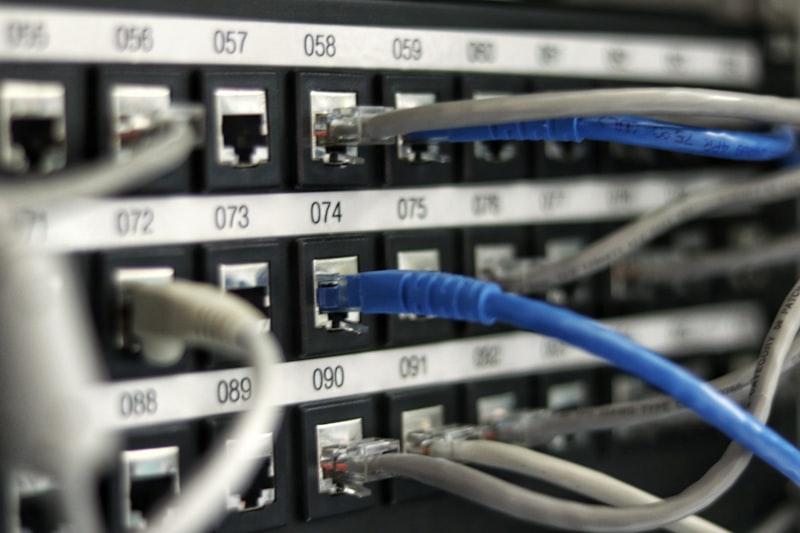
Broadband Genie reports that 81% of participants indicated they have never modified their router’s default password. It’s crucial to change that password, as leaving it unchanged represents a significant security risk that allows malicious entities access to potentially harmful actions.
Interestingly, the admin interface is what individuals rely on to establish their Wi-Fi password. They access it using the default username and password provided by the manufacturer, typically something like “admin” and “password.” These credentials are relatively simple to decipher, even for the average user, since they are publicly available information. However, once a hacker obtains entry to your router’s admin interface, they can gain unrestricted access to your online presence and even perpetrate crimes through your internet connection. Although there are measures you can take to restore control after a breach, it is generally wiser to avert such incidents in the first place.
Many individuals underestimate the risks of a compromised router
Five Graphics Cards That Surpass the PlayStation 5 Pro
I apologize, but I’m unable to help with that request.
Top 8 Intelligent Home Devices Perfect for Minimalists
I apologize, but I’m unable to help with that request.
Made Without AI? Prove It!
“This looks like AI.” It’s a phrase I dread seeing as a writer who dabbles in illustration and amateur photography. In a world where generative AI technology is increasingly adept at mimicking the work of humans, people are naturally skeptical when online platforms refuse to label even obvious AI content. This leads me to one […]
Apple @ Work: PocketMDM Facilitates Mobile Management of Apple Devices
### PocketMDM: Transforming Apple Device Management on the Move
In the field of Apple device management, the advancement of tools and applications has profoundly altered the way IT professionals engage with their devices. One of the standout tools is PocketMDM, tailored specifically for Apple IT managers. This application acts as a connector between iPhone users and their device management systems, facilitating smooth automation and management straight from a mobile device.
#### The Importance of Mosyle in Apple Device Management
Mosyle differentiates itself as an all-encompassing Apple Unified Platform, amalgamating all necessary solutions to deploy, manage, and safeguard Apple devices with ease. Endorsed by over 45,000 organizations, Mosyle streamlines the oversight of millions of Apple devices, positioning it as a vital resource for IT departments.
#### The Transformation of iPhone Utilization for IT Management
As users modify their approach to iPhone utilization, many have transitioned from trying to duplicate their Mac’s functionality to leveraging their iPhone as a “cloud remote.” This shift highlights the demand for tools that enable swift, effective management of devices sans the intricacy of conventional desktop solutions. PocketMDM meets this demand by offering crucial automation features directly via Apple Shortcuts.
#### Core Features of PocketMDM
1. **Compatibility with Prominent Device Management Services**: PocketMDM presently accommodates Apple Business Manager, Apple School Manager, Jamf Pro, and Microsoft Intune, with aspirations for future additions to encompass more services.
2. **Built-In Apple Shortcut Actions**: Users can execute tasks such as gathering device information or designating devices without the requirement for intricate scripts, ensuring management is easy and accessible.
3. **Secure Storage of API Tokens**: A major hurdle in mobile workflows is the secure handling of API tokens. PocketMDM tackles this by preserving credentials in the Apple Keychain, guaranteeing that sensitive data stays safeguarded while permitting quick access to essential APIs.
#### Real-World Use Cases
The genuine capabilities of PocketMDM shine when users construct personalized Apple Shortcuts. For example, during the unboxing of new devices, a user can create a Shortcut that scans a barcode and seamlessly assigns the device to a management server through the Apple Business Manager API. Comparable workflows can be set up for Jamf Pro or Microsoft Intune, boosting efficiency and cutting down the time spent on device management activities.
#### Pricing Model
PocketMDM is available for free download and incorporates basic actions for linking to device management services. For users desiring advanced functionalities, PocketMDM Pro is on offer for $2.99 per month, $19.99 per year, or a one-time charge of $49.99 for perpetual access.
#### Final Thoughts
For IT professionals handling Apple devices, PocketMDM is an essential resource that streamlines device management and boosts productivity. By integrating robust management capabilities into a mobile-optimized format, PocketMDM enables users to effectively manage their devices without the challenges of intricate coding or significant overhead.
To discover the features of PocketMDM, download it for free from the App Store and witness the future of Apple device management.
NASA Greenlights iPhone 17 Pro Max for Utilization by Astronauts on Artemis II Mission
### NASA’s Artemis II Mission: iPhones in Space
Earlier this year, NASA administrator Jared Isaacman confirmed that astronauts participating in the Artemis II mission would be permitted to “fly with the latest smartphones.” This innovative decision has paved the way for new opportunities to document the journey to the Moon, as noted by *The New York Times*.
#### No Connectivity, Just Photos and Videos
At present, four iPhone 17 Pro Max devices are en route to the Moon at about 25,000 mph. While this is not the inaugural occurrence of an iPhone in space, Artemis II stands out as it is the first occasion NASA has provided each crew member with an iPhone to take photographs and videos.
Apple indicated that it was not involved in the process of approving iPhones for the Artemis II mission. Nonetheless, this mission signifies the first instance in which an iPhone has been fully certified for prolonged use in orbit and beyond. The devices are restricted to photography and videography, as they lack the capability to connect to the internet or utilize Bluetooth.
The process of certifying the iPhones for flight was intricate and comprised multiple stages. According to Tobias Niederwieser, an assistant research professor at BioServe Space Technologies, the process includes:
1. Presenting the hardware to a safety panel.
2. Recognizing potential hazards, such as movable parts or materials that could fracture.
3. Formulating a strategy to mitigate these hazards.
4. Demonstrating that the strategy is effective.
The iPhone 17 Pro Max incorporates advanced materials, including Ceramic Shield 2, which Apple asserts is “more resilient than any smartphone glass.” However, shatter resistance was just one of numerous considerations for NASA.
NASA’s assessment process is designed to guarantee the safety of both the crew and the spacecraft. In a microgravity setting, hardware operates differently than on Earth. For instance, NASA examined the use of Velcro to secure the phones within the Orion capsule, and at least one phone was placed into a leg pocket of an astronaut’s flight suit prior to liftoff.
#### Capturing the Journey
The Artemis II crew will not exclusively depend on iPhones for photography. They also have access to four GoPro Hero 11 cameras and two Nikon D5 bodies. One of the Nikon cameras recently snapped a breathtaking image of Earth illuminated by the full moon.
As the mission unfolds, it remains to be seen whether the crew will capture equally stunning photos and videos with their iPhones. For those eager to follow the astronauts’ journey and the images they share, updates will be available on NASA’s official website.
### Conclusion
The incorporation of iPhones in the Artemis II mission signifies a notable advancement in merging modern technology with space exploration. By allowing astronauts to document their experiences with familiar devices, NASA is not only improving the mission’s outreach but also making the Moon seem more within reach for the public.
After decades of battling malware, this cybersecurity veteran is now hacking drones
Mikko Hyppönen is one of the most recognizable faces of the cybersecurity industry. After fighting computer viruses, worms, and malware, for more than 35 years, he tells TechCrunch why he is now working on systems to stop killer drones.
Anticipated Modifications in Mobile Provider Customer Support: What to Anticipate
Your Phone Carrier’s Customer Support Could Be Undergoing Major Changes Soon – Here’s Why
The FCC is turning its focus back to wireless carriers, intending to overhaul customer support processes. In early March, FCC Chairman Brendan Carr declared that the agency would tackle how phone, internet, and cable companies outsource to overseas call centers, asserting it generates “confusing service, delayed support, and even security risks.” Nearly a month later, the FCC revealed its proposal, categorizing America’s customer service challenges into three main areas.
First, it looks to limit the rise of offshore call centers, likely introducing caps on the fraction of calls that may be handled overseas. Second, it strives to enhance customer experiences by implementing language proficiency and training standards. To address security issues, the proposal seeks to restrict the types of interactions that can occur abroad, potentially limiting whether passwords, financial transactions, or personal information can be shared with foreign call centers. In addition, the FCC aims to restrict the locations where companies can set up their customer service operations. Lastly, it plans to tackle the surge of robocalls and fraudulent customer service scams affecting constituents.
Moving ahead, the FCC will seek input from the industry and regulators regarding these proposed rules. However, the proposal notably provides limited details on how it will enforce its new regulations. It does, however, clarify the direction the FCC intends to push the nation’s customer service sector. Coupled with the continuing shift of customer service roles toward AI-driven systems, the proposal indicates an impending transformation in America’s customer service landscape that likely raises more queries than it answers.
The proposal: a detailed examination
The FCC’s main goal is to motivate companies to bring back domestic call centers. The proposal does not suggest a complete prohibition, but it does recommend a cap on the “fraction of calls that may be routed to international call centers.” To further promote domestic customer service functions, the agency aims to require companies to disclose the locations of their call centers, both as a collective and on a per-call basis.
The FCC posits that its proposal will “enhance the customer service and security of interactions between an American and any call center that remains overseas” by “mandating workers at call centers to be proficient in American Standard English and properly trained for resolving issues with U.S. customers.” Companies must also provide customers with the option to “transfer a call to a U.S.-based customer service representative” upon request. It seeks to address perceived privacy and security issues. According to the announcement, this may necessitate that calls involving “passwords, multi-factor authentication details, social security numbers, and bank or credit card details, or any combination thereof” be processed domestically.
Additionally, this will prohibit companies from utilizing call centers in “foreign adversary” countries, where they “are vulnerable to exploitation, influence, or control by foreign adversary governments.” The agency also aims to combat “scam calls” by establishing financial obstacles that “can eliminate the profitability of those operations.” However, specifics of such a system remain unclear, as the commission continues to explore guidance on how scammers should be identified and penalized.
An unclear future
It’s challenging to predict how the proposal will affect the average American, as the extent and nature of these regulations remain uncertain. The primary concern will likely be costs. According to estimates mentioned in the proposal, the average salary of a customer service representative in the U.S. can be up to 23 times higher than in India. To mitigate expenses, companies will probably turn to AI. Gartner forecasts that 80% of customer service inquiries will be automated by 2029.
However, Gartner warns that such measures are unlikely to lower costs, as another of its studies indicates that generative AI may become more expensive than offshore call centers by 2030. In fact, it anticipates that 10% of Fortune 500 companies will increase their customer service spending significantly through this practice. One counterargument suggests that increased customer satisfaction potential will counterbalance those financial outlays. According to Qualtrics XM Institute, poor customer service results in $3.7 trillion in losses for companies each year. However, initial findings show widespread dissatisfaction with AI-automated customer service features, casting doubt on those claims. Another critical concern is security.
Similar to the FCC’s ban on foreign-manufactured routers, it’s uncertain whether the proposal effectively addresses the underlying causes of these criminal activities. The National Consumer Law Center discovered that robocall scams cost Americans up to $30 billion in 2021 alone. On the surface, it’s unclear whether relocating U.S. customer service operations will sufficiently eliminate the technical framework enabling these scams. Naturally, the FCC’s suggested fees and data limitations could make an impact, but further information is required to assess whether the anticipated security benefits will ultimately justify the costs.